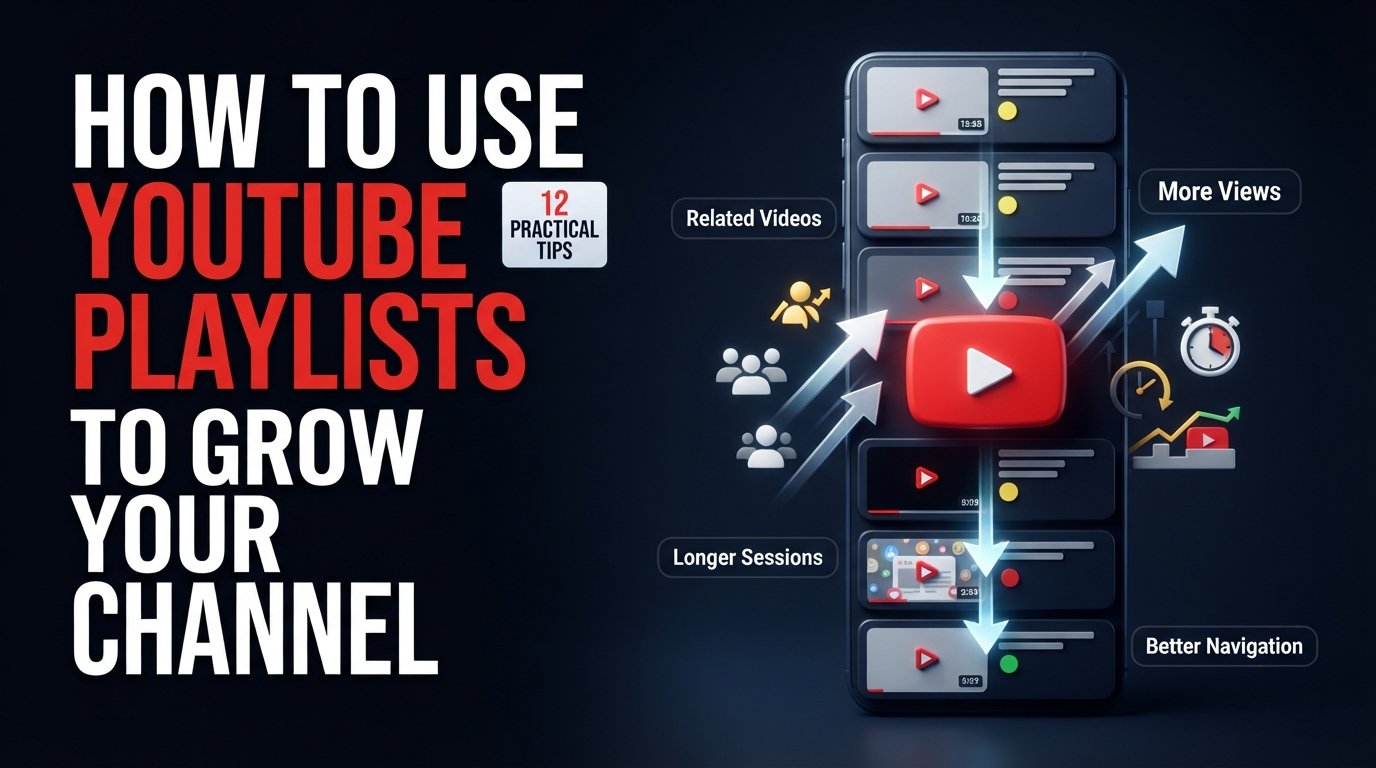
How to Use YouTube Playlists to Grow a Channel
Growing a YouTube channel is not only about publishing more videos. How you organize your existing content can also affect how easily viewers discover and watch more of your videos.
One useful way to organize content is with YouTube playlists. Playlists allow creators to group related videos together so viewers can find multiple pieces of content around the same topic.
If you are wondering how to use YouTube playlists to grow a channel, this guide will show you practical ways to create better playlists, connect related videos, improve channel navigation, and build a better viewing journey.
1. Create Playlists Around Specific Topics
The first step is to organize your videos around clear topics.
For example, if your channel focuses on YouTube growth, you could create separate playlists for:
- YouTube SEO
- YouTube Analytics
- YouTube Shorts
- YouTube Thumbnails
- YouTube Channel Growth
- YouTube Beginner Guides
This makes it easier for viewers to find the exact type of content they are interested in.
Avoid putting every video into one large playlist. Focused playlists are easier to understand and manage.
2. Group Closely Related Videos
A playlist should contain videos that naturally belong together.
For example, a playlist about YouTube SEO could include videos about keyword research, video titles, descriptions, thumbnails, and search optimization.
When videos are closely related, someone interested in one topic may also be interested in the others.
This creates a natural path for viewers to discover more of your content.
3. Give Every Playlist a Clear Title
Your playlist title should tell viewers exactly what they will find.
Instead of:
My Videos
Use:
YouTube SEO Tips for Beginners
Instead of:
Channel Tips
Use:
How to Grow a YouTube Channel
Clear titles make playlists easier to understand and can naturally include relevant phrases related to your content.
4. Write Useful Playlist Descriptions
Don’t leave your playlist description empty.
Use a few sentences to explain what the playlist covers and who it is for.
For example:
This playlist covers practical YouTube SEO tips for beginners, including keyword research, video titles, descriptions, thumbnails, and basic optimization techniques. Follow the videos to build a stronger foundation for your YouTube channel.
The description should be useful rather than a collection of repeated keywords.
5. Build a Learning Path
Playlists can be especially useful for educational channels.
Instead of randomly arranging videos, create a logical sequence.
For example:
- How to Start a YouTube Channel
- How to Choose a YouTube Niche
- How to Find Video Topics
- How to Create Better Titles
- How to Make Better Thumbnails
- How to Optimize Video Descriptions
- How to Understand YouTube Analytics
A viewer can start with the basics and move through more advanced topics.
6. Connect Videos That Answer Related Questions
Think about what your viewers may want to watch after finishing a video.
For example, someone watching a video about YouTube thumbnails may also want to learn about titles and click-through performance.
Organize these related videos into a playlist.
This helps turn individual uploads into a connected content library rather than isolated videos.
7. Feature Important Playlists on Your Channel
Your playlists should be easy to discover.
Organize your channel homepage so visitors can quickly find major content categories and important playlists.
For example, a beginner-focused channel could feature:
Start Here: YouTube Basics
Learn SEO: YouTube SEO Tutorials
Improve Videos: Titles and Thumbnail Guides
Understand Performance: YouTube Analytics
This gives new visitors a clearer path through your content.
8. Add New Videos to Relevant Playlists
Your playlist strategy should continue as your channel grows.
Whenever you publish a new video, ask:
Does this video belong in an existing playlist?
If the answer is yes, add it.
For example, if you create a new video about optimizing YouTube descriptions, it could be added to a playlist covering YouTube SEO.
Keeping playlists updated makes them more useful and prevents older collections from becoming outdated.
9. Use Playlists to Build Content Series
A series can be a powerful way to organize related videos.
For example:
YouTube SEO Series
- Part 1: Keyword Research
- Part 2: Video Titles
- Part 3: Descriptions
- Part 4: Thumbnails
- Part 5: Analytics
A series gives viewers a reason to explore multiple videos because each video is connected to the same broader topic.
You don’t have to label every playlist as a “series,” but the content should have a clear connection.
10. Direct Viewers Toward Related Content
Mention relevant playlists when appropriate.
For example, near the end of a video, you can tell viewers:
If you want to learn more about YouTube SEO, check out the full playlist linked with this video.
You can also use relevant YouTube features to make related content easier to access.
The important thing is that the recommended playlist should genuinely match what the viewer is watching.
11. Study Which Topics Work Best
Use your YouTube Analytics data to understand which videos and topics are performing well.
Look for patterns such as:
- Videos that consistently attract viewers
- Topics that receive strong engagement
- Videos that lead viewers toward other content
- Playlists that receive attention
- Content that attracts returning viewers
If several videos around one topic perform well, consider building a dedicated playlist around that subject.
This lets your future organization reflect what your audience actually watches.
12. Keep Improving Your Playlist Strategy
Your first playlist structure doesn’t have to be permanent.
As your channel grows, you may discover that some playlists are too broad while others are too narrow.
You can:
- Rename unclear playlists
- Change the video order
- Remove unrelated videos
- Add newer videos
- Create new topic-specific playlists
- Combine overlapping collections
Review your playlists periodically and make sure they still provide a useful experience.
How YouTube Playlists Can Help Channel Growth
Playlists don’t guarantee more views or subscribers. Their main purpose is to make related content easier for viewers to discover and navigate.
A well-organized playlist can help turn a single video into an entry point to several related videos.
For example, imagine someone discovers your channel through a video about YouTube keywords. If that video belongs to a playlist containing related videos about titles, descriptions, thumbnails, and analytics, the viewer has an easy way to continue exploring the same subject.
This can make your channel feel more organized and useful.
Example Playlist Strategy for a Small Channel
Suppose you run a beginner YouTube tips channel.
You could organize your content into five main playlists:
Playlist 1: Start a YouTube Channel
Cover the basics for completely new creators.
Playlist 2: YouTube SEO
Include videos about keywords, titles, descriptions, and search optimization.
Playlist 3: YouTube Thumbnails
Group videos about thumbnail design, clicks, and visual optimization.
Playlist 4: YouTube Analytics
Include beginner-friendly videos about traffic sources, impressions, and video performance.
Playlist 5: Channel Growth
Add videos covering audience building, content strategy, and improving overall channel performance.
This structure gives visitors several clear paths depending on what they want to learn.
Common Playlist Mistakes to Avoid
Avoid putting unrelated videos into the same playlist just to increase its video count.
Don’t use confusing titles or leave every playlist with an empty description.
Also avoid creating too many playlists that contain almost the same videos. This can make your channel harder to navigate.
Most importantly, don’t create playlists solely for search terms. Build them around genuine relationships between your videos and the needs of your audience.
Final Thoughts
Learning how to use YouTube playlists to grow a channel is mainly about organizing your content into useful viewing paths. Create focused playlists, group related videos, use clear titles, write helpful descriptions, and arrange educational content in a logical order.
As your channel grows, keep adding relevant videos and use analytics to understand which topics deserve stronger content collections.
Playlists are not a shortcut to guaranteed growth, but they can make your channel easier to explore and help viewers discover more of the content they already find interesting.
When your videos work together instead of existing as isolated uploads, your channel can provide a much more organized and useful experience for viewers.