How to Understand YouTube Audience Analytics: 12 Easy Tips
How to Understand YouTube Audience Analytics: 12 Easy Tips

How to Understand YouTube Audience Analytics
Growing a YouTube channel is not only about uploading videos. To understand what is working, you also need to understand the people watching your content. This is where YouTube audience analytics can help.
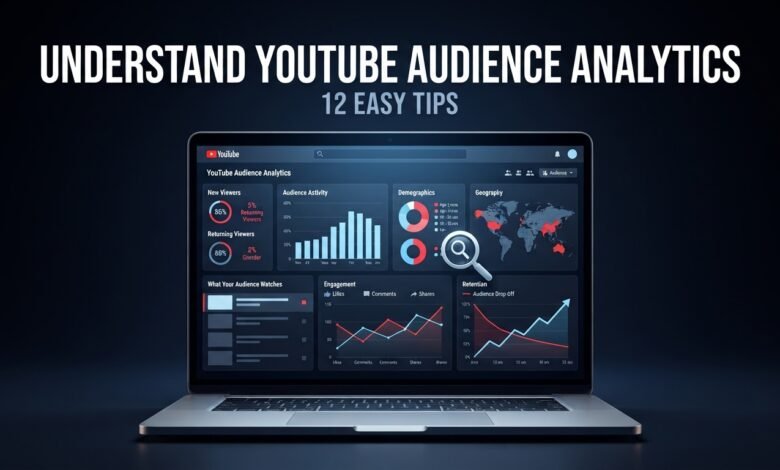
YouTube Analytics provides information about viewers and their behavior. Depending on your channel and available data, you can learn about returning viewers, new viewers, audience demographics, when viewers are active, what your audience watches, and how viewers discover and interact with your content.
For beginners, these reports can seem complicated. You do not need to understand every metric immediately. Start with the most useful audience reports and use them to answer simple questions about your viewers.
In this guide, you will learn how to understand YouTube audience analytics and how to use audience information to make better videos.
What Is YouTube Audience Analytics?
YouTube audience analytics refers to the audience-related information available inside YouTube Studio Analytics.
These reports can help you understand:
- Who is watching your videos
- Whether viewers are new or returning
- What other content your audience watches
- When your viewers are active on YouTube
- How viewers discover your channel
- How different groups interact with your content
The exact reports and amount of available data can vary depending on your channel and audience size.
The purpose of audience analytics is not simply to collect statistics. The goal is to understand your viewers well enough to make more relevant content.
1. Find the Audience Tab
Start by opening YouTube Studio and going to Analytics.
Look for the Audience section. You may see several reports designed to help you understand your viewers.
Spend some time becoming familiar with the different sections.
You do not need to check them every day. For a small channel, reviewing audience data periodically can help you identify patterns as your channel grows.
Ask yourself:
- Who is watching my videos?
- Are viewers coming back?
- What topics interest them?
- When are they active?
- What other videos do they watch?
These questions are more useful than simply checking subscriber numbers.
2. Understand New Viewers
New viewers are people who are discovering your channel or content for the first time during the relevant measurement period.
A high number of new viewers can indicate that your videos are reaching people who have not previously watched your channel.
New viewers are especially important for growing channels because they represent potential future audience members.
Look at which videos are attracting new viewers.
For example, suppose you publish ten videos and discover that two of them attract significantly more new viewers than the others.
Study those videos.
Ask:
- What topics do they cover?
- How specific are their titles?
- What problem do they solve?
- Where are viewers discovering them?
- What format do they use?
You may find useful patterns for future content.
3. Understand Returning Viewers
Returning viewers are people who have watched your channel before and come back to watch more content.
Returning viewers can provide useful information about audience interest.
If viewers repeatedly return to your channel, it may indicate that they find your content useful or relevant enough to watch again.
However, do not treat one audience metric as a complete measure of channel success.
Instead, compare returning-viewer patterns with your content topics, upload schedule, and overall viewer behavior.
If certain topics consistently bring viewers back, consider creating more related content.
4. New Viewers vs. Returning Viewers
One of the most useful ways to understand your audience is to compare new and returning viewers.
Imagine you have:
Many new viewers + few returning viewers
This could suggest that your videos are reaching new people but may not yet be creating enough reasons for them to watch additional content.
On the other hand:
Fewer new viewers + many returning viewers
This may indicate that your existing audience is engaged with your content, while you may have an opportunity to reach more new viewers.
These patterns are not automatic diagnoses. Use them as questions that encourage you to investigate your videos further.
5. Check When Your Viewers Are on YouTube
YouTube Analytics may provide a report showing when your viewers are on YouTube.
This information can help you understand when your audience tends to be active.
For example, you might notice that many of your viewers are active during evening hours.
You can use this information when planning your publishing and community activity.
However, do not assume that publishing at the exact moment your audience is active will automatically increase views.
Your topic, video quality, viewer interest, and other factors also influence performance.
Use the report as one piece of information when planning your schedule.
6. Understand What Your Audience Watches
Another useful audience report can show what other videos, channels, or content your audience watches, depending on the data available to your channel.
This can help you understand the broader interests of your viewers.
For example, imagine you run a YouTube growth channel and discover that your audience also watches videos about:
- YouTube SEO
- Thumbnail design
- Video editing
- Content ideas
- YouTube Shorts
These interests can help you brainstorm related topics.
Do not simply copy other creators. Instead, use audience interests to identify questions you can answer in your own style.
7. Look at Audience Demographics Carefully
YouTube may provide demographic information such as age ranges and gender distribution for your audience, depending on available data.
These reports can help you understand the broad characteristics of your viewers.
For example, if your content is designed for beginners but your audience data suggests many viewers are experienced creators, you may want to reconsider your content level.
However, demographics should not be your only source of information.
Viewer behavior, comments, search queries, watch patterns, and content performance can often provide more practical clues about what your audience wants.
8. Understand Geography
Geographic information can show where your viewers are located when sufficient data is available.
This can be useful if your content targets a particular country, language, or region.
For example, a creator making English-language tutorials may discover viewers from several different countries.
You can use this information to think about:
- Language
- Examples
- Publishing times
- Cultural references
- Topics relevant to your audience
Again, use geography as context rather than assuming that every viewer from a particular location has identical interests.
9. Use Audience Analytics for Content Ideas
One of the most practical uses of audience analytics is finding new content ideas.
Suppose your audience frequently watches videos about YouTube thumbnails.
Instead of making unrelated content, you could create a content series:
- How to make a YouTube thumbnail
- Common thumbnail mistakes
- Thumbnail text tips
- Best thumbnail ideas for beginners
- How to improve thumbnail click-through rate
This approach allows you to build related videos around a subject your audience already appears interested in.
10. Connect Audience Analytics With Other Metrics
Audience analytics should not be analyzed separately from your other YouTube data.
Combine audience information with:
- Views
- Watch time
- Audience retention
- Traffic sources
- Impressions
- Click-through rate
- Engagement
For example, if a topic attracts many new viewers but those viewers leave quickly, examine the video’s introduction and content structure.
If another topic attracts returning viewers and strong watch time, investigate what makes that content useful to your existing audience.
Combining metrics gives you more context than looking at one number.
11. Do Not Change Your Strategy Too Quickly
Small channels often have limited data.
A sudden increase or decrease in viewers does not necessarily mean your entire content strategy needs to change.
Instead, look for patterns across multiple videos.
For example, if one video attracts many new viewers, wait to see whether related videos produce a similar result.
Repeated patterns provide stronger evidence than a single unusual result.
YouTube Analytics should help you make informed decisions rather than encouraging you to react emotionally to every change.
12. Turn Audience Data Into Action
The most important step is turning analytics into practical improvements.
Use this simple process:
Study your audience → Identify patterns → Create related content → Publish → Analyze again.
For example:
Audience insight: Viewers are interested in YouTube SEO.
Content action: Create more beginner-friendly SEO tutorials.
New data: Check how viewers respond to those videos.
Next action: Continue developing topics that show useful and repeated audience interest.
This turns analytics into an ongoing learning process.
Common YouTube Audience Analytics Mistakes
Beginners often make several mistakes when studying audience data.
Checking Analytics Too Often
Constantly refreshing statistics can make small changes appear more important than they are.
Focusing Only on Demographics
Knowing your viewers’ age or location is useful, but behavior often provides more actionable information.
Copying Other Channels
Audience interests can inspire ideas, but your content should still provide your own value and perspective.
Ignoring Returning Viewers
New viewers are important, but understanding why people return can help you build a stronger content strategy.
Making Decisions From One Video
One video can behave differently from your normal pattern. Look for trends across multiple videos.
Final Thoughts
Learning how to understand YouTube audience analytics can help you create content that better matches your viewers’ interests.
Start by understanding new and returning viewers, when your audience is active, what other content they watch, and the demographic or geographic information available to your channel.
Then connect these insights with views, watch time, retention, traffic sources, and engagement.
You do not need to become a data expert. You simply need to ask better questions and use the answers to improve your next video.
The goal of YouTube Analytics is not to chase numbers. It is to understand your audience and use that knowledge to create more useful, relevant, and engaging content