How to Get More Engagement on YouTube Videos: 12 Tips
How to Get More Engagement on YouTube Videos: 12 Tips

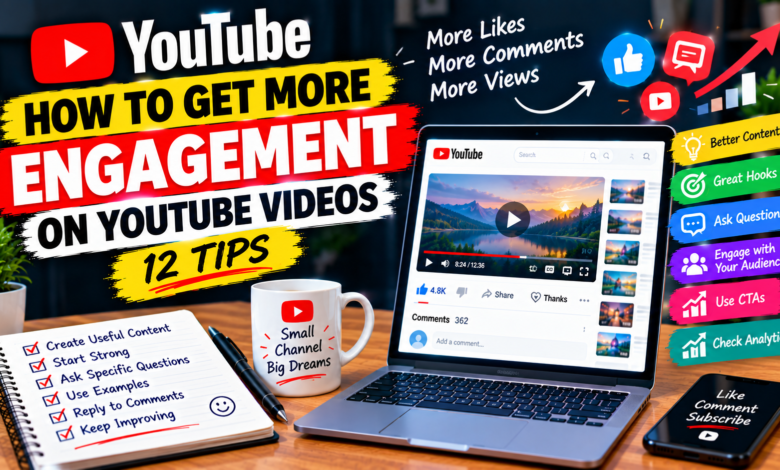
How to Get More Engagement on YouTube Videos: 12 Practical Tips
Getting views on YouTube is important, but views alone do not tell the whole story. Engagement such as likes, comments, shares, and meaningful viewer interaction can show that people are actually paying attention to your content.
For small and growing channels, improving engagement can be challenging. Many viewers may watch a video and leave without commenting, liking, or sharing it. The solution is not to constantly ask viewers for engagement. Instead, you need to create videos that encourage people to participate naturally.
In this guide, you will learn how to get more engagement on YouTube videos using practical strategies that can work for beginners, small channels, and established creators.
1. Start With a Strong Hook
The first few seconds of a video are important because viewers quickly decide whether the content is worth watching.
Instead of starting with a long introduction, immediately explain the problem, benefit, or interesting idea.
For example:
“If your YouTube videos get views but almost no comments, these five changes can help you create more interaction.”
A clear hook gives viewers a reason to continue watching.
The longer viewers remain interested in your content, the more opportunities you have to encourage meaningful engagement.
2. Create Content Around Audience Problems
One of the best ways to encourage engagement is to create content that addresses real problems.
Before making a video, ask:
- What does my audience struggle with?
- What questions do they repeatedly ask?
- What information would save them time?
- What problem can I help them solve?
For example, instead of making a general video about YouTube, you could create:
“Why Do Small YouTube Channels Get Views but No Subscribers?”
Specific problems give viewers something relevant to discuss.
3. Ask Better Questions
Questions are one of the simplest ways to encourage comments.
However, avoid generic questions such as:
“What do you think?”
Try asking something specific.
For example:
“Which YouTube feature do you find most difficult to understand: Analytics, SEO, thumbnails, or playlists?”
This gives viewers clear choices and makes commenting easier.
You can also ask viewers to share their experience, opinion, or next question.
4. Create Opportunities for Viewers to Choose
Interactive choices can make videos more engaging.
For example, if you are comparing two strategies, ask viewers which one they prefer.
You could say:
“Which would you choose for a new channel: uploading Shorts every day or publishing one detailed video each week?”
This encourages viewers to think about the topic and share their answer.
You can also use comparisons, predictions, polls, and “choose one” questions when they naturally fit the subject.
5. Make Your Content Easy to Understand
Confusing videos can reduce engagement because viewers may leave before reaching the useful information.
Use simple language, logical sections, examples, and clear explanations.
For tutorial content, consider a structure such as:
- Explain the problem
- Show why it happens
- Present the solution
- Demonstrate the steps
- Explain common mistakes
- Summarize the key points
A clear structure makes it easier for viewers to follow the video and respond to the information.
6. Use Stories and Real Examples
Facts and instructions can become more interesting when they are supported by examples.
Suppose you are explaining how to improve a YouTube title. Instead of only describing the concept, show a weak title and then demonstrate how you would improve it.
You can also explain a real scenario:
“Imagine you have a small channel with 50 subscribers and your latest video receives only 20 views. Here is what you could check first.”
Examples help viewers connect the information to their own situation.
7. Give Viewers a Reason to Comment
People need a reason to participate.
At the end of your video, ask a question connected directly to the content.
For example:
“Which of these YouTube strategies are you already using? Tell me in the comments.”
You can also ask:
- What should I explain next?
- Which step was most useful?
- What problem are you currently facing?
- What would you add to this list?
- Have you tried this strategy before?
The more relevant the question, the more natural the engagement request feels.
8. Reply to Comments and Continue Conversations
Engagement should not stop after a viewer leaves a comment.
When viewers ask genuine questions or share useful experiences, respond when possible.
Instead of replying:
“Thanks!”
you can add something meaningful.
For example:
“That is a common problem with new channels. Have you noticed whether your traffic is coming mostly from Search or Browse?”
This turns a single comment into a conversation.
Active conversations can also make other viewers more comfortable joining the discussion.
9. Use Pinned Comments Strategically
A pinned comment can become an additional engagement tool.
After publishing your video, pin a question or useful follow-up.
For example:
“What is the biggest challenge you are facing with your YouTube channel right now?”
You can also use a pinned comment to:
- Ask a question
- Highlight an important resource
- Clarify something from the video
- Invite viewers to share experiences
- Continue a discussion
Keep the pinned comment relevant to the video rather than using it only for promotion.
10. Make Your Calls to Action Natural
You can ask viewers to like, comment, subscribe, or share your video, but avoid making engagement requests feel repetitive.
Instead of saying:
“Like, comment, subscribe, and share!”
multiple times, connect your CTA with the value of the video.
For example:
“If this strategy helped you understand YouTube Analytics, let me know which metric you want me to explain in the next video.”
This creates a reason for the viewer to interact.
11. Create Videos That Encourage Discussion
Some topics naturally generate more discussion than others.
Consider formats such as:
- Comparisons
- Tutorials
- Mistake breakdowns
- Case studies
- Before-and-after examples
- Frequently asked questions
- Strategy discussions
- Beginner challenges
For example, a comparison between two YouTube strategies can encourage viewers to explain which method they prefer.
The important thing is that the discussion should come from the topic itself rather than from artificial engagement bait.
12. Study Your YouTube Analytics
Your analytics can help you understand which videos generate stronger audience responses.
Compare your videos and look for patterns.
You might discover that:
- Tutorial videos receive more comments.
- Certain topics receive more likes.
- Some videos generate more shares.
- Specific formats keep viewers engaged longer.
- Certain questions produce more discussion.
Use these observations to improve future videos.
You do not need to copy another creator’s content. Instead, identify what your own audience responds to and build on those patterns.
How to Increase Engagement on a Small YouTube Channel
Small channels should focus on meaningful engagement rather than trying to create artificial activity.
Suppose a video receives 100 views and several viewers leave thoughtful comments. That can provide useful information about what your audience wants.
Read those comments carefully.
Look for repeated questions, problems, opinions, and suggestions. These can become ideas for future videos.
For example, if several viewers ask how to improve YouTube thumbnails, you could create a separate tutorial about that specific problem.
This creates a useful cycle:
Video → Viewer Question → Conversation → New Video Idea
Over time, this approach can help your channel become more connected to its audience.
Mistakes That Can Reduce Engagement
If you want more engagement, avoid these common mistakes:
Long introductions: Get to the main topic quickly.
Generic CTAs: Give viewers a specific reason to comment.
Ignoring comments: Respond to useful questions when possible.
Overloading videos with information: Focus on clarity instead of adding unnecessary details.
Clickbait: Make sure your content delivers what the title and thumbnail promise.
Artificial engagement: Avoid buying likes, comments, or other fake interactions.
Repeating the same CTA: Keep engagement requests natural and relevant.
Final Thoughts
Learning how to get more engagement on YouTube videos is mainly about giving viewers reasons to participate.
Create useful content, start with a strong hook, ask specific questions, use examples, encourage discussion, reply to comments, and study your analytics. Most importantly, focus on creating a positive viewing experience instead of chasing engagement numbers alone.
You do not need a massive audience to start building engagement. Even a small group of viewers can provide valuable comments, questions, and feedback that help you improve your content.
When viewers feel that your videos are useful and that their opinions matter, engagement can become a natural part of your channel’s growt