
How to Find Why a YouTube Video Is Underperforming: 12 Tips
How to Find Why a YouTube Video Is Underperforming: 12 Tips

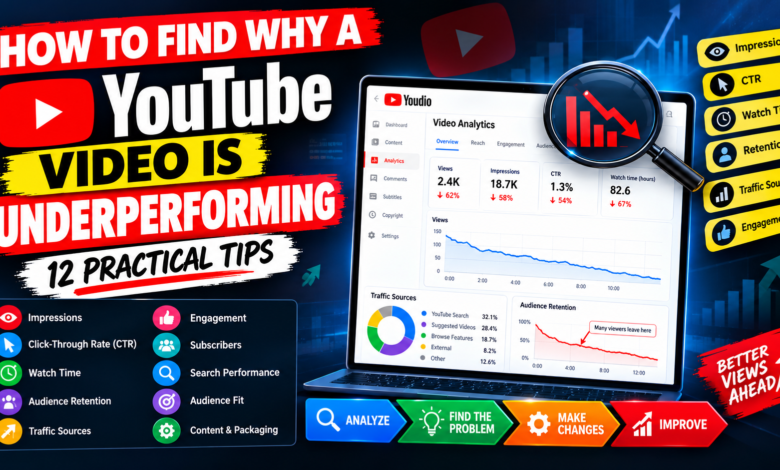
How to Find Why a YouTube Video Is Underperforming: 12 Practical Tips
Have you ever uploaded a YouTube video and expected it to get views, only to discover that its performance is much lower than expected? This can be frustrating, especially when you spend hours researching, recording, editing, and publishing content.
The good news is that a video with low views does not always mean your content is bad. The problem could be your topic, thumbnail, title, audience retention, traffic sources, or the way your video meets viewers’ expectations.
Learning how to find why a YouTube video is underperforming helps you identify these problems and make informed improvements instead of guessing.
In this guide, you will discover 12 practical ways to diagnose an underperforming YouTube video and improve your future content strategy.
1. Start With YouTube Studio Analytics
The first step is to open YouTube Studio and select the video you want to investigate. Open its Analytics section to review the available performance data.
Focus on these important metrics:
- Views
- Impressions
- Click-through rate (CTR)
- Watch time
- Average view duration
- Audience retention
- Traffic sources
- Subscribers gained
Do not focus on just one number. A video with fewer views may still attract the right audience and generate valuable watch time.
Compare the video’s results with your usual performance and investigate where the biggest weakness appears.
2. Check Whether Your Video Gets Enough Impressions
Impressions indicate how often YouTube displays your thumbnail in eligible places on the platform.
If impressions are low, your video may not be reaching many potential viewers. Possible reasons include limited audience interest, strong competition, an unclear topic, or a mismatch with your existing audience.
Ask yourself whether the topic solves a specific problem and whether viewers are likely to search for or explore it.
You should also compare the video’s impressions with similar uploads on your channel. Remember that low impressions alone do not prove a problem with your channel or mean that YouTube is deliberately restricting your content.
3. Investigate Your Click-Through Rate
If your video receives impressions but relatively few clicks, examine its title and thumbnail.
Your click-through rate measures the percentage of eligible impressions that resulted in views through those impressions.
A lower-than-usual CTR may suggest that your video presentation needs improvement.
Try these changes:
- Make the title specific and easy to understand.
- Highlight the main benefit of watching.
- Use a simple, readable thumbnail.
- Remove unnecessary thumbnail text.
- Ensure the title and thumbnail communicate the same idea.
Avoid misleading promises. A thumbnail might attract clicks temporarily, but viewers may leave if the video does not deliver what they expected.
4. Review the Audience Retention Graph
Audience retention shows how viewers watch your video over time. It can reveal the moments when viewers leave or continue watching.
Open the retention report and examine the introduction, major sections, and ending.
If many viewers leave near the beginning, your opening may take too long to deliver value. If a sharp decline appears later, that section may be confusing, repetitive, or unrelated to the main topic.
Use these observations to improve your next video. Start with the viewer’s problem, explain what they will learn, and deliver useful information without unnecessary delays.
5. Compare Average View Duration and Watch Time
Average view duration tells you how long viewers watch your video on average, while watch time measures the total time viewers spend watching.
Both metrics help you understand performance, but they should be interpreted in context.
For example, a short tutorial may naturally have a lower average view duration than a detailed educational video. That does not automatically make the tutorial unsuccessful.
Compare similar videos and look for patterns. If viewers consistently leave before reaching your main explanation, improve your structure, pacing, and examples.
Do not add unnecessary minutes simply to make a video longer.
6. Analyze Your Traffic Sources
YouTube Studio shows where viewers discover your content. Depending on the video, traffic may come from YouTube Search, Browse features, Suggested videos, playlists, external websites, or other sources.
Your traffic sources can help identify the nature of the problem.
For example, if you expected search traffic but received very little, your topic may not match the questions viewers are searching for. If Suggested videos contribute few views, consider whether your video connects naturally with other relevant content.
Use the Reach tab to understand discovery patterns and decide which areas deserve further investigation.
7. Check Whether Your Topic Matches Search Intent
A video can target a relevant keyword and still underperform if it does not answer the viewer’s actual question.
Imagine someone searching for a beginner-friendly YouTube SEO tutorial. They probably want practical steps, examples, and clear explanations—not a long introduction about the history of YouTube.
Before publishing, identify what viewers expect from the topic.
Make sure your title, introduction, examples, and main explanation all address the same need.
Search-friendly content should help viewers accomplish something rather than simply repeat a keyword.
8. Compare Similar Videos on Your Channel
Your existing uploads can provide valuable clues about what works for your audience.
Choose a few videos covering similar subjects and compare their performance over comparable periods.
Look for differences in:
- Topic and viewer intent
- Thumbnail and title
- Video length and structure
- CTR and audience retention
- Traffic sources
- Subscribers gained
You may discover that specific tutorials perform better than broad discussions, or that viewers prefer examples over general advice.
Use these findings to guide future topics instead of copying competitors without understanding your own audience.
9. Examine Engagement and Subscriber Growth
Likes, comments, shares, and subscribers gained can provide additional context about how viewers respond to your video.
Low engagement does not automatically mean a video is unsuccessful. Some useful videos answer a question quickly without generating many comments.
However, if viewers watch but rarely interact, consider whether the content offers a natural opportunity for discussion.
Ask a specific question related to the video. For example, a YouTube analytics tutorial could ask viewers which metric they find most confusing.
Reply to meaningful comments and use recurring questions to develop future content ideas.
10. Check Whether the Video Fits Your Channel
Sometimes the issue is the topic rather than the video’s technical quality.
If your channel focuses on YouTube growth but you suddenly publish an unrelated video, your regular viewers may be less interested.
Review whether the video serves your intended audience and supports your channel’s overall subject.
A clear content focus helps viewers understand why they should subscribe and what they can expect from future uploads.
You can still experiment with new topics, but connect them logically to your audience’s interests whenever possible.
11. Improve the Title and Thumbnail Carefully
If the data suggests that the video presentation is weak, consider updating the title or thumbnail.
A strong title communicates the topic clearly, while an effective thumbnail makes the main idea easy to understand at a glance.
For example, replace a vague title with one that identifies the problem the video solves.
Change one major element at a time when practical, then monitor performance. Remember that CTR can vary with traffic source, audience, and how widely YouTube shows the video.
Avoid judging a change from a tiny sample of impressions or assuming that every increase in CTR will automatically produce more views.
12. Create an Action Plan Based on Your Findings
After reviewing your analytics, write down the most likely problem and the next action you will take.
Use this simple diagnostic guide:
- Low impressions: Reassess the topic, audience fit, and discoverability.
- Low CTR compared with similar videos: Review the title and thumbnail.
- Early audience drop-off: Improve the opening and deliver value sooner.
- Weak search traffic: Check search intent and topic relevance.
- Low engagement: Add useful discussion prompts where appropriate.
- Poor performance across several metrics: Review the overall topic, content quality, and audience expectations.
Make focused improvements and continue monitoring results. Avoid changing everything at once, because doing so makes it harder to understand which adjustment helped.
Final Thoughts
Learning how to find why a YouTube video is underperforming starts with understanding the data behind your content. Low views can result from several different issues, so there is no single solution that works for every video.
Use YouTube Studio to investigate impressions, CTR, retention, watch time, traffic sources, and audience fit. Compare the results with similar uploads, identify the weakest area, and make a targeted improvement.
Most importantly, treat every video as an opportunity to learn. When you consistently analyze results and respond to what your audience needs, you can make better content decisions and build a stronger YouTube channel over time.
