
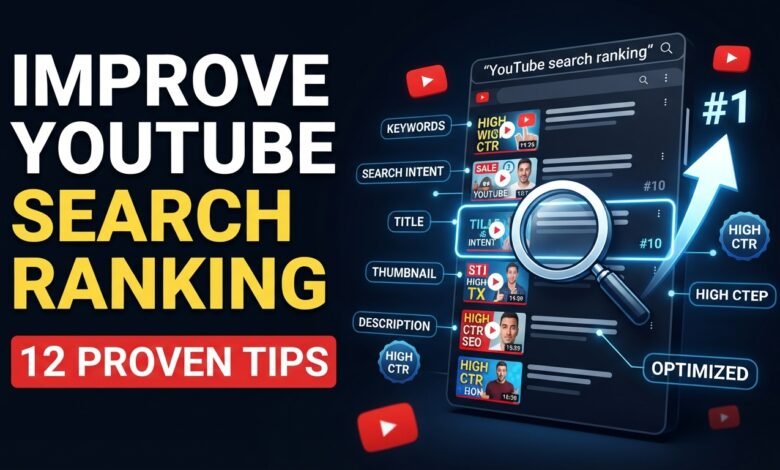
How to Improve YouTube Search Ranking: 12 Proven Tips
Getting your videos to appear higher in YouTube search can help more people discover your content. However, search ranking is not based on one single trick. YouTube considers multiple signals to determine which videos are relevant and useful for a particular search.
If your videos are not appearing prominently for the topics you target, you can improve your overall search strategy by focusing on search intent, relevant keywords, titles, descriptions, content quality, viewer satisfaction, and channel consistency.
In this guide, you’ll learn how to improve YouTube search ranking with practical strategies that beginners can apply to their videos.
1. Understand What Your Audience Is Searching For
Before optimizing a video, understand the exact problem or question your audience wants to solve.
For example, someone searching for:
how to make YouTube thumbnails
has a different intent from someone searching for:
best YouTube thumbnail size
The first person may want a tutorial, while the second may simply need a specification.
Create videos that closely match the purpose behind the search. When your content satisfies the searcher’s intent, it becomes more relevant to the query.
2. Choose a Specific Target Keyword
Every video should have a clear primary topic.
Instead of trying to target dozens of unrelated keywords, choose one main search phrase and build the video around it.
For example:
How to Improve YouTube Search Ranking
can be the main topic, while related phrases can naturally appear throughout the content.
Specific long-tail searches can also make it easier to create highly focused videos because you know exactly what question you’re answering.
3. Create a Clear, Search-Friendly Title
Your video title should make the topic immediately understandable.
A good search-focused title can include the main keyword naturally while also giving viewers a reason to watch.
For example:
How to Improve YouTube Search Ranking: 12 Proven Tips
This tells the viewer exactly what the video is about and what format to expect.
Avoid keyword stuffing. Repeating the same phrase multiple times can make a title look unnatural and less appealing.
4. Optimize Your Video Description
Your description gives YouTube and viewers additional information about the video’s subject.
Start with a clear explanation of what the video covers. Naturally mention the main topic and related terms where they genuinely fit.
For example, a description for a YouTube SEO tutorial could naturally discuss:
- YouTube search ranking
- keyword research
- video titles
- descriptions
- search intent
- YouTube SEO
Don’t turn the description into a list of repeated keywords. Write useful information for people first.
5. Make Content That Fully Answers the Search Query
A strong title can help your video get discovered, but the actual content needs to deliver what the title promises.
If your video targets a question, answer that question clearly.
For tutorial videos, consider explaining:
- What the problem is
- Why it happens
- How to solve it
- Examples
- Common mistakes
- Practical steps
The more completely your video addresses the viewer’s needs, the more useful the content can be.
6. Improve Your Video’s Opening
The first part of your video matters because viewers need to understand quickly that they found the right content.
Avoid spending too much time on long introductions.
Instead, explain what the viewer will learn and begin delivering useful information.
For example:
“In this video, I’ll show you 12 practical ways to improve your YouTube search ranking, including keyword selection, titles, descriptions, and content optimization.”
A clear opening establishes relevance immediately.
7. Create an Attractive Thumbnail
Although thumbnails are not simply a keyword-ranking tool, they can influence whether people choose your video when it appears in search results.
Create thumbnails that are:
- Easy to understand
- Readable on mobile
- Visually focused
- Relevant to the video
- Different enough to stand out
Avoid putting too much text on the thumbnail.
Your title and thumbnail should work together rather than repeating the exact same message.
8. Use Related Keywords Naturally
Your main keyword is only one part of your video’s topic.
Think about related questions and phrases viewers may use.
For a video about YouTube search ranking, related concepts might include:
- YouTube SEO
- YouTube keywords
- video optimization
- search results
- video titles
- YouTube descriptions
- search intent
Use these terms naturally when they accurately describe your content.
Don’t force keywords into sentences where they don’t belong.
9. Study Competing Search Results
Search your target topic on YouTube before publishing.
Look at the videos that appear and examine:
- Their titles
- Thumbnail styles
- Content angles
- Video formats
- Questions they answer
- Information they may not cover
The goal isn’t to copy another creator. Instead, identify opportunities to make your own video clearer, more useful, or more specific.
For example, if most results provide general advice, you could create a detailed beginner-focused tutorial with practical examples.
10. Improve Viewer Satisfaction
Search optimization shouldn’t stop at keywords.
Your video needs to satisfy the person who clicked it.
Keep the content organized and remove unnecessary sections that don’t help answer the viewer’s question.
Use headings, examples, demonstrations, screenshots, or step-by-step explanations when appropriate.
If viewers consistently find your content useful, that can support a stronger overall channel experience.
11. Connect Related Videos
If you have multiple videos covering related subjects, connect them together.
For example:
YouTube Keyword Research
↓
YouTube Video Titles
↓
YouTube Thumbnails
↓
YouTube Search Ranking
You can use playlists, end screens, cards, descriptions, and verbal recommendations to help viewers discover related content.
This creates a more organized content library and makes it easier for viewers to continue learning.
12. Review Your YouTube Analytics
Use YouTube Analytics to understand how your videos are performing.
Pay attention to information such as:
- Traffic sources
- Search terms where available
- Impressions
- Click-through rate
- Watch time
- Audience retention
- Viewer behavior
If a video receives search impressions but few clicks, review its title and thumbnail.
If viewers click but leave quickly, examine whether the introduction and content match the promise made by the title.
Use these observations to improve future videos instead of making random changes.
Common YouTube Search Ranking Mistakes
Avoid these common mistakes when optimizing your videos.
Keyword stuffing
Using the same keyword excessively can make your content unnatural.
Targeting unrelated keywords
Choose keywords that genuinely match the video.
Misleading titles
Don’t promise something that the video doesn’t deliver.
Ignoring search intent
A keyword alone doesn’t tell you what type of content the searcher expects.
Copying competitors
Use competing videos for research, not duplication.
Focusing only on ranking
A higher position is useful, but creating content that viewers actually want is the more important long-term goal.
Final Thoughts
Learning how to improve YouTube search ranking requires more than adding keywords to a title. Start by understanding search intent, choosing a specific topic, creating a clear title, writing a useful description, and producing content that answers the viewer’s question.
Then improve the presentation with a strong thumbnail, connect related videos, and use YouTube Analytics to identify areas for improvement.
There is no single optimization trick that guarantees a particular search position. Instead, focus on making each video highly relevant to its intended audience and continuously improve your content based on real performance data.